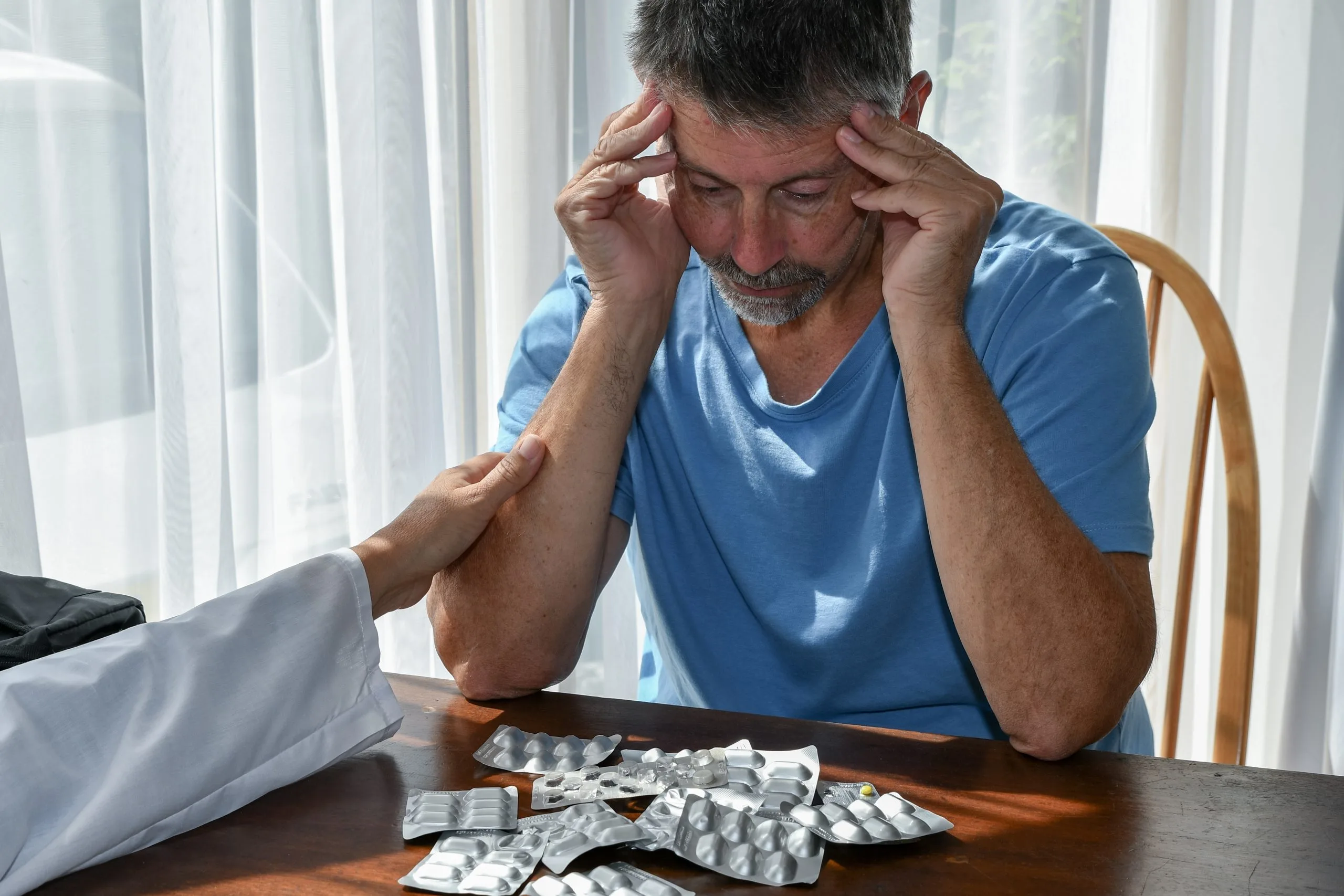
Fentanyl addiction has become a significant public health crisis, leaving individuals and families feeling overwhelmed. Its extreme potency makes it one of the most dangerous substances available, but the most important thing to know is this: recovery is possible, and help is available at Optima Healing and Recovery in Henderson, NV.
Below, we break down exactly what fentanyl addiction is, why it’s so dangerous, and the proven treatment options that help people reclaim their lives.
Fentanyl is a powerful synthetic opioid, originally developed to manage severe pain, particularly after surgery or for patients with advanced-stage cancer. It is estimated to be 50 to 100 times more potent than morphine.
Due to its low cost of production, it is often mixed with other street drugs like heroin, cocaine, or methamphetamine, and is frequently pressed into counterfeit pills made to look like prescription opioids (such as OxyContin or Vicodin) or benzodiazepines (like Xanax). Many individuals who overdose on fentanyl are not even aware they have taken it.
Signs of fentanyl addiction may include:
Using more of the drug than intended
Strong cravings that interfere with daily life
Needing higher doses to feel the same effect
Withdrawal symptoms when not using
Continuing to use despite problems at work, school, or home
Pulling away from friends and family
The primary danger of fentanyl is its high potential for a fatal overdose. Because it is so potent, even a minuscule amount – as small as two milligrams, equivalent to a few grains of salt – can be lethal. When buying drugs on the street, there is no way to know if they are laced with fentanyl or how much is present. A very small dose can slow or stop breathing, depriving the brain of oxygen (hypoxia), leading to coma, permanent brain damage, or death.
Rapid dependence. The body quickly becomes dependent, making it harder to stop.
Severe withdrawal. Stopping without medical support can cause intense physical and emotional symptoms.
Hidden exposure. Fentanyl is often mixed into other substances, increasing the chance of accidental overdose.
There is no single solution for everyone. Effective treatment addresses both the physical dependence and the psychological aspects of the disease. At Optima Healing and Recovery, care is personalized, blending medical and therapeutic support to address both sides of addiction.
Detox is usually the first step. Fentanyl withdrawal can be incredibly severe and, in some cases, life-threatening. Symptoms can begin within hours of the last dose and may include:
Intense muscle and bone pain
Severe anxiety, agitation, and insomnia
Nausea, vomiting, and diarrhea
Uncontrollable leg movements (“kicking”)
Cold flashes with goosebumps
Sweating, restlessness, and intense cravings
Attempting to detox at home is excruciatingly difficult and dangerous. Because tolerance can drop rapidly during abstinence, using the same amount as before can easily cause a fatal overdose.
Medical detoxification provides a safe, supervised environment with medication and 24/7 support. We are equipped to manage complex situations. Detox alone is not a cure, but it lays the foundation for everything that follows.
Medication-Assisted Treatment combines FDA-approved medications with counseling and behavioral therapies to provide a “whole-patient” approach. For opioid use disorder, MAT is considered the gold standard of care.
After dependence forms, cravings and withdrawal can be overwhelming, and these symptoms are often what pull people back into use. Medications help by:
Reducing cravings
Easing withdrawal symptoms
Blocking the euphoric effects of opioids
Helping the brain heal and normalize over time
When cravings and withdrawal are under control, a person can fully engage in the therapeutic work needed for long-term recovery.
The FDA has approved several medications to treat opioid use disorder. The right choice is a clinical decision made between a patient and their provider, based on individual needs and circumstances.
Buprenorphine is a partial opioid agonist. It activates opioid receptors enough to reduce cravings and prevent withdrawal, but to a much lesser degree than full agonists like fentanyl or heroin. Buprenorphine is often combined with naloxone in a formulation known as Suboxone.
Methadone is a long-acting full opioid agonist. It binds to the same receptors as fentanyl but slowly and without the same euphoric rush, relieving withdrawal and cravings for 24 to 36 hours. Because it is a full agonist, its use is highly regulated and typically dispensed daily from a certified opioid treatment program (OTP) clinic. It has been used successfully for decades.
Naltrexone is an opioid antagonist. It blocks opioid receptors so that any opioid use produces no euphoric effect – if a person on naltrexone uses fentanyl, they will not feel high. It is not an opioid, is not addictive, and does not cause withdrawal upon cessation. However, a person must be fully detoxed from all opioids for 7 to 10 days before starting it to avoid precipitating severe withdrawal. It is available as a daily pill or a once-monthly injection.
Therapy is the heart of lasting recovery. While MAT manages the physical side of addiction, behavioral therapies help people understand and change the thoughts and behaviors that fuel it. We offer both individual and group therapy.
Cognitive Behavioral Therapy (CBT). Helps individuals identify and change destructive thinking patterns, recognize triggers, and develop coping strategies for cravings.
Motivational Interviewing (MI). A collaborative style that resolves ambivalence about change and strengthens internal motivation and recovery goals.
Individual counseling. One-on-one sessions to work through personal challenges, trauma, and underlying mental health concerns.
Group therapy. Sharing experiences with peers builds community, reduces isolation, and offers a supportive space to practice new social skills.
Recovery is about rebuilding a full, healthy life. We treat the whole person, not just the addiction:
Co-occurring mental health care. Conditions like anxiety, depression, and bipolar disorder often go hand in hand with addiction. Treating both at the same time leads to stronger results.
Trauma-focused support. As a clinic specializing in trauma, mental health, and substance abuse, we address the deeper experiences that often contribute to addiction.
Wellness and lifestyle support. Mindfulness practices, nutrition, and healthy routines – part of our comprehensive wellness assessments – help the body and mind recover.
Fentanyl addiction treatment is not a one-size-fits-all process. Optima Healing and Recovery offers a range of program intensities, allowing a seamless transition as a person gains stability and independence.
Our Partial Hospitalization Program (PHP) is the most intensive level of outpatient care, designed for individuals who require a highly structured environment but do not need 24-hour inpatient supervision. It is ideal for those early in recovery, dealing with relapse fears, or transitioning out of detox or residential treatment.
Clients attend treatment several hours a day, five days a week, at our Henderson, NV, facility – participating in individual therapy, group counseling, and educational workshops before returning home in the evenings.
The Intensive Outpatient Program (IOP) offers structured treatment for substance use and co-occurring mental health challenges with more flexibility than PHP. It suits individuals who need more than traditional outpatient therapy but not full-day programming.
Our IOP typically involves treatment a few hours a day, several days a week, focusing on relapse prevention, emotional regulation, and building a support network – while clients maintain work, school, or family responsibilities.
The Outpatient Program is our most flexible level of care. Sessions are typically held one to three times per week and may last several weeks to several months, using approaches like CBT and Motivational Interviewing to help people manage cravings, improve mental health, and solidify a long-term recovery plan.
OP is often ideal for those transitioning from PHP or IOP who are ready for a more independent stage of recovery while balancing work, school, and family.
No one should face fentanyl addiction alone. A strong support system – clinical professionals, family, friends, and peers – is one of the most powerful predictors of long-term success.
Support helps in many ways:
It reduces feelings of isolation and shame.
It provides accountability and encouragement.
It offers a safe space to share struggles and celebrate progress.
It reminds people they are not defined by their addiction.
Group therapy creates a built-in community, while individual counseling provides private, focused guidance. Family involvement, through education and counseling, can heal relationships damaged by addiction. Peer support groups like Narcotics Anonymous (NA) or SMART Recovery are also invaluable resources.
Taking the first step is often the hardest part, but the process is simple: reach out. Our team at Optima Healing and Recovery helps each person understand their options and find the right level of care.
The process begins with a confidential call and an initial alcohol/drug evaluation to understand your substance use history, any co-occurring mental health conditions, and your recovery goals. From there, we develop a personalized treatment plan.
To begin, call (702) 329-3370. Our Henderson location at 1389 Galleria Dr is open Monday through Friday. You can also learn more on the Our Team page.
Recovery does not end when a treatment program is complete. Long-term sobriety depends on building healthy ways to cope with the stress, trauma, and emotional pain that once led to drug use.
Helpful coping strategies include:
Identifying triggers. Knowing what situations, people, or feelings spark cravings helps you plan ahead.
Mindfulness and meditation. To manage stress and stay present.
Exercise. To boost mood and reduce anxiety.
Hobbies and creative outlets. To find joy and purpose outside of substance use.
Establishing routines. Structure and consistency reduce the chaos that can fuel relapse.
Staying connected. Ongoing therapy and support groups keep you accountable.
Caring for mental health. Continuing to treat conditions like anxiety or depression protects your recovery.
These skills are taught throughout treatment, especially in CBT-based programs.
Relapse does not mean failure – it often means the treatment plan needs adjusting. The goal is to recognize warning signs and intervene before a full return to use occurs.
Long-term recovery is supported by:
Step-down care. Moving through PHP, IOP, and OP allows support to taper gradually.
Continued therapy and support groups. Ongoing counseling addresses new challenges as they arise.
A relapse prevention plan. Knowing what to do when cravings hit gives you confidence and control.
Healthy relationships and self-care. Surrounding yourself with supportive people protects your progress.
At Optima Healing and Recovery, we provide aftercare planning so every client leaves with a clear roadmap for their continued journey.
Fentanyl addiction is a serious, life-threatening condition – but it is treatable. With medically supervised detox, medication-assisted treatment, behavioral therapy, and structured levels of care like PHP, IOP, and OP, recovery is within reach. Add a strong support system and healthy coping skills, and lasting sobriety becomes an achievable goal.
At Optima Healing and Recovery in Henderson, NV, individuals receive personalized, evidence-based care, with both individual and group therapy available. Reaching out for help is a sign of strength.
If you’re ready to take the first step, call us to learn more and begin your path forward. You don’t have to face this alone – and recovery starts the moment you reach out.
Call (702) 329-3370